“I can read this, but I do not really understand it.”
Work it out in a Study Session
A mentor asks short Socratic questions, responds to what you actually know, and helps you produce evidence through explanation and practice.
- 1Choose one topic
- 2Set an honest energy level
- 3Think aloud with the mentor
- 4Name the win or struggle before ending
“I know what to do. Starting is the hard part.”
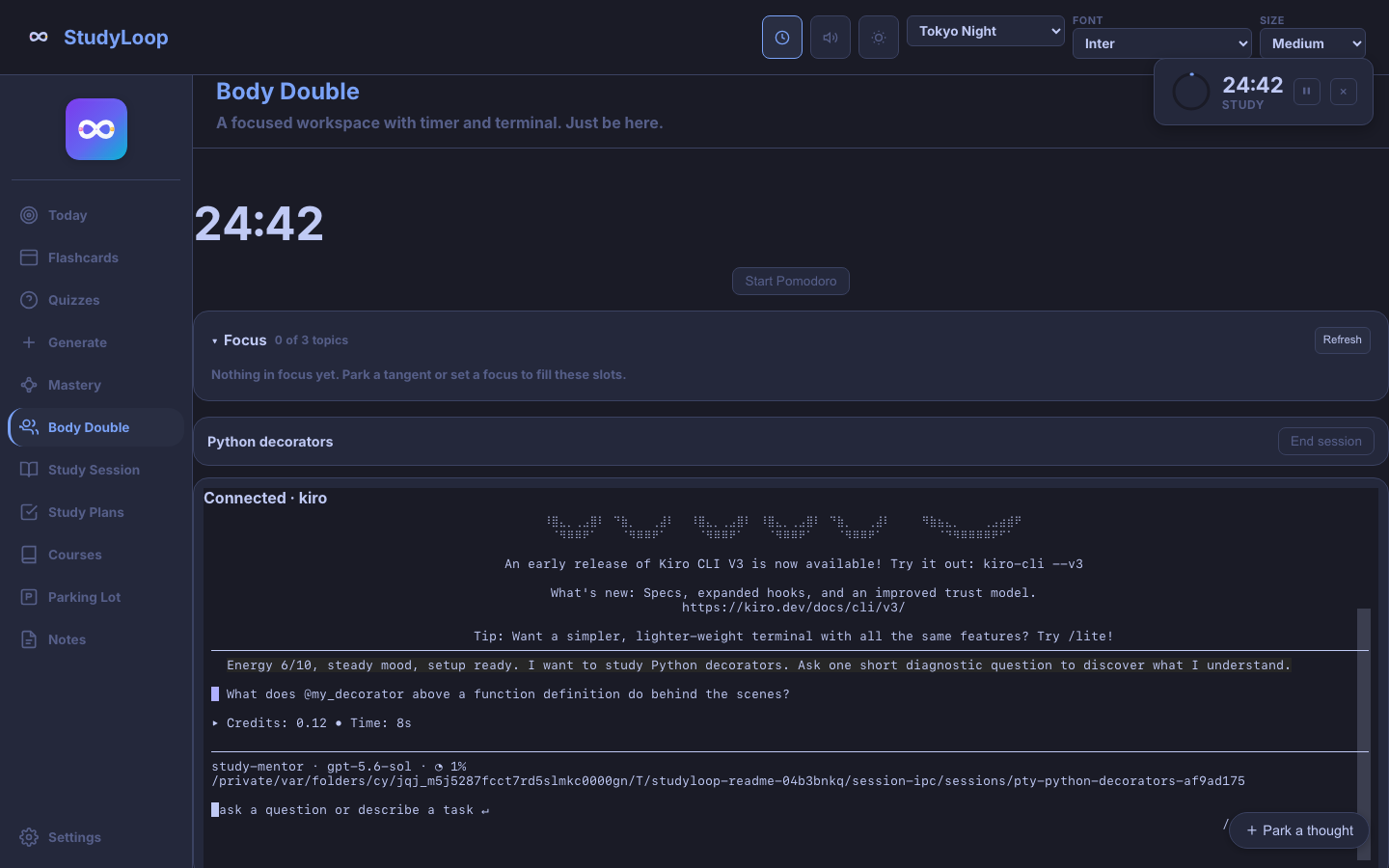
Use Body Double for quiet momentum
A visible timer, up to three focus items, and a low-pressure agent presence help you stay beside one concrete task without turning it into a lesson.
- 1Name the next physical action
- 2Choose whether a timer would help
- 3Park tangents instead of switching
- 4Stop cleanly when the block ends
“Everything feels equally urgent.”
Ask Today for one next action
Today weighs the time and energy you have against reviews, recent continuity, and weak concepts. It is a suggestion, not a command.
- 1Enter available time
- 2Choose an energy level
- 3Read one recommendation
- 4Shrink or replace it if it feels wrong
“My goal is too large to hold in my head.”
Give the goal a small Study Plan
Describe why the goal matters, what success looks like, and a few observable milestones. Plans are optional and should make sessions easier to begin.
- 1Write the goal in your own words
- 2Choose three to five milestones
- 3Use start, mid, and end checkpoints
- 4Return to action when planning becomes avoidance
“I understood this last week. Where did it go?”
Use retrieval practice and review
Local flashcards, quizzes, teach-backs, and spaced review help you retrieve what matters. Notes are context; demonstrated recall is the evidence.
- 1Review what is due
- 2Try before revealing
- 3Record the honest result
- 4Use weak areas to shape a later session
Study Session and Body Double keep the same return point
Both use the same session lifecycle, so the work can be ended, recorded, and resumed. The difference is tone: teaching when you need understanding, presence when you need momentum.
Follow the Web UI steps →